Thursday, March 11, 2021

Wisconsin Trapping Season 2020-2021


44 pound beaver and a 24 pound otter, second otter tag of the season


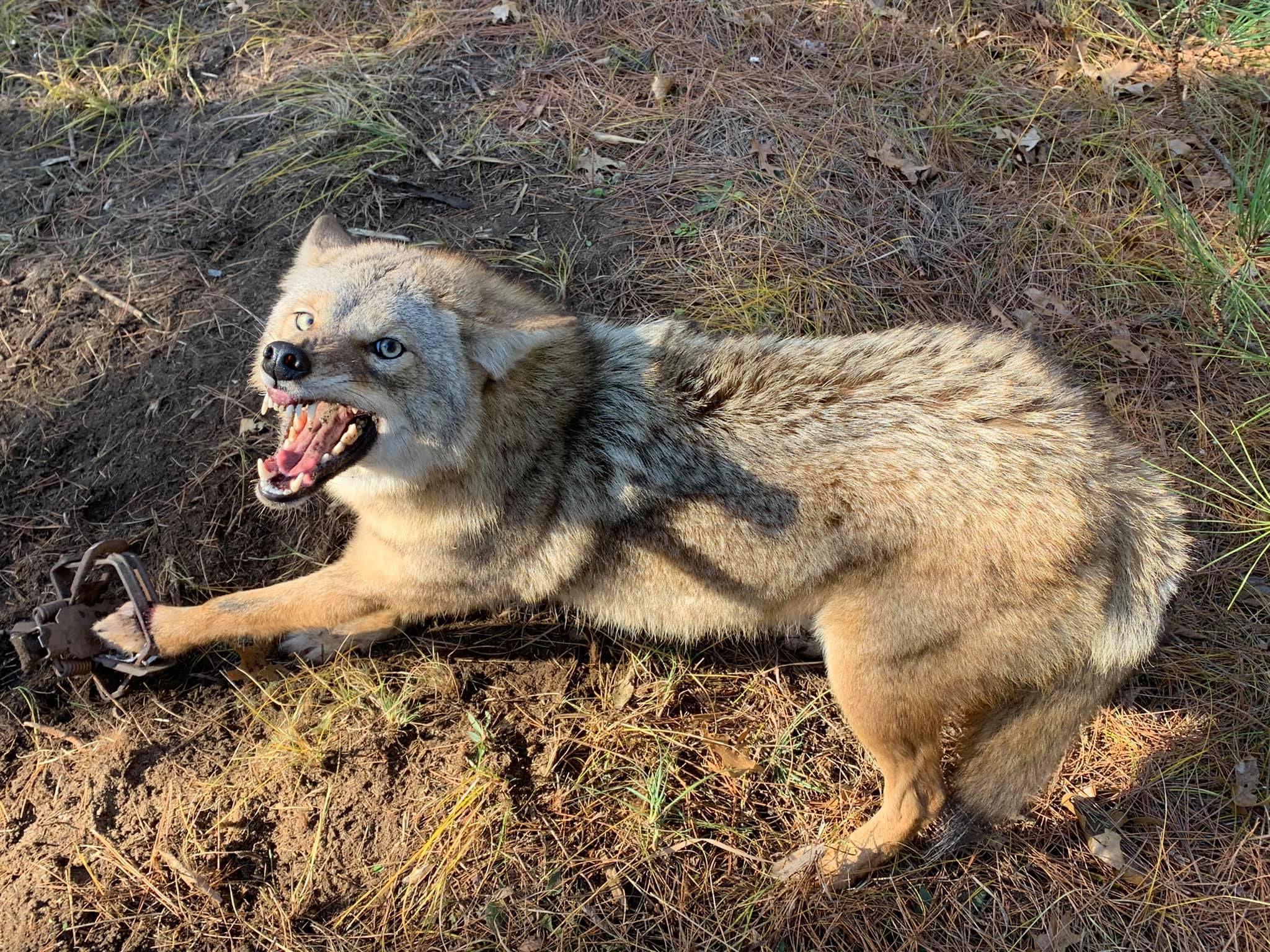
A big male coyote I caught on the very last day of the season in a cable restraint.  I set this cable on the first day and checked it every day.  It never caught anything until the very last morning.
You can watch the making of this set here:  Cable Restraint Set


Large female wolf I caught and released; gave me a "thanks" look before walking away.

Large female in heat caught on a drag in a Bridger 2 dogless, fully offset and laminated.  The release video of this animal can be watched here:  Open Field Drag Wolf

This was the third wolf I caught and released from the season.  The Wisconsin Wolf Hunt opened just 2 weeks after I caught this female.

Another large male wolf caught by the hind foot in a Bridger offset/laminated, set as a pee post for grey fox.

This was the second wolf of the season.  Caught just 3 weeks prior to the Wisconsin Wolf Hunt.  Though large and beautiful, this is actually still just a juvenile.
The release on this animal can be seen here:  Hindfoot Release


You can watch a video describing this set here:  https://www.youtube.com/watch?v=1VlpNY0IZZc


This sandy colored bobcat release video can be seen here:  Light Colored Bobcat


This was the first otter tag of the season filled on a foothold drowner using Gator Oil as an attractant.


This was a very aggressive bobcat, the release can be seen here:  Mean Bobcat


A photo that I take frequently, but just showing how you can't even tell which paw the animal was caught by.


Released


This release video can be seen here:  Young bobcat release


This release video can be seen here:  Badger release


This is the first wolf of this season.  Another juvenile male.  You can watch the release video here:  Wisconsin Wolf Release and Hand-in-Trap Demo


This release video can be seen here:  Bobcat release


Thursday, June 27, 2019

WI Trapping Season 2019-2020

I started a nuisance coon trapping job today so I figured this might as well be the start to my 2019-2020 trapping season blog post! This post will be updated periodically throughout the year with my day's catches, and will be much more active in the fall when the fur season begins, but until then, here are some nuisance animal pics.

I caught 8 coon the first night, with many more to go.  Caught in enclosed-trigger traps and live cages, all caught on Southern Snares Bandit Buster DP coon bait the wild cherry smear paste on a marshmallow.


Summer nuisance beaver that were flooding an agricultural field.  

Incidental otter turned into the DNR; there are SO many otter in the state that we are going to a bag limit next season.  With no natural predators and an abundance of food year round, the otter population is stable and thriving.

First coyote of the fur trapping season; a big male in a backfoot scent post set on a trail in the middle of the tire tracks.

Cinnamon phase coon caught in a coyote set, currently at the taxidermist :)

Really love drags, especially trapping public land, because the critters can take cover in the brush and aren't so aggressive because they are hidden.

Another public land coyote, pretty color

Our state's nuisance animal.

This bobcat is the most special bobcat I've ever caught, but that story will be saved for future publication.

Released this young tom unharmed because I didn't want to tag such a small cat, it worked out for me the next day though.

A beautiful winter red against a crisp winter sunrise.


A beautiful male that I had to release due to already filling my  bobcat tag.

My homemade "riot shield" release is a great way to easily release incidentals, providing the safest method for both you and the animal.  This bobcat released completely unharmed.


Thursday, March 7, 2019

Turn a $10 coyote into a $100 coyote.

For some reason everyone complains that the fur prices are low, but those same people want to bring a dirty, shot up and frozen whole coyote to the fur buyer and expect a hundred dollar bill. It doesn’t work like that. That coyote is worth $10-$20 as is. However, hours spent prepping pelts will be rewarded with a large fur check after the auction. The proof is in my $74-$125 Wisconsin coyotes. While not every coyote will bring that much, most do and that’s rewarding, but not until after the hard work is put in. No matter the market, we must always remember that we don’t do it for the money.


I do have a fur handling blog post further back on my site, which can be viewed here: Putting Up Coyote Fur, and in that blog post I talk more in depth about what I do through the whole process. This post is more "in a nutshell".

An example of a Wisconsin coyote after my entire washing process is complete.  White clarity is the goal on the belly when looking at pelts to send to auction.

Here is an example showing why washing coyotes before boarding is worth the effort.  The two white outside coyotes were completing washed using my washing process and were sent to auction.  The middle coyote was being tanned for someone's wall, therefore I didn't need to go through the process of washing it before getting it dry.  You can see how much the belly is stained from blood, dirt/mud, urine, etc.  Coyotes are extremely dirty animals, and during the washing process, I fill my bathtub up 3-4 times on each coyote just to get the water to run clear again.

The coyote on the left is a large Eastern from Pennsylvania.  The coyote on the right is a pale Western from Colorado.  Coyotes come in so many colors and sizes depending on the region.  I personally do not believe in the "coywolf" bologna, and just believe that coyotes have adapted to be larger as you go out east simply because of the terrain, weather, prey, etc.  It's the same with turkeys, Osceolas are smaller than Easterns but that doesn't mean that they are hybrids bred with a grouse to make them smaller! 

I made this hat from the PA pelt on the left in the picture above it. At auction, that pelt would have brought $5 due to the dark coloring of browns, reds, and black.  Also the fur is more coarse and less soft.  However once tanned, it makes an absolutely stunning hat that will keep someone warm for a lifetime!  Real fur is biodegradable and better for the environment compared to faux fur made from petroleum products.

The fur buyer at a stop where trappers bring their dried pelts (in those white bags) to be counted, processed, and loaded up, eventually taken to the auction processing house in Stoughton, WI.  NAFA is an excellent auction house to send your fur to.  They have the world's best fur buyers come from across the globe to buy North American wild fur as well as ranched furs.  Their excellent reputation, expert graders, and knowledgeable responses to offered prices means that you get a good price on your furs.

My helpers.  They enjoy sitting next to me while I brush out and pin the pelts down for hours at night.  I think they get jealous that I don't brush them as often as I do the coyotes!

Some finished Wisconsin coyotes hanging to complete the drying process before the next auction.  The experienced eye can notice the rubbing spots between the shoulders of the second and the last coyote, as well as some rubbing on the hips of the last coyote, however the coyote fur market is so strong right now, even rubbed coyotes are in demand.

MANY guys call me out saying they don't believe that I get high dollar for Wisconsin coyotes, so below are a couple shots from NAFA auctions that prove it.  I have had coyotes go for as long as $8 and has high as $138.  SO many factors play a role in what a pelt will sell for.

This Wisconsin coyote of mine sold for $122.00 USD.

This Wisconsin coyote of mine sold for $74.00 USD.

My process for washing pelts is actually very simple.  I wash my coyotes in my bathtub at home.  First I simply submerge them in cold water and agitate with some dawn dish soap to work out all dirt, mud, burrs, blood, ticks, loose hair, etc.  After two or three of these cycles, the water runs fairly clean so I move on to the next step.  I soak them in cold water with hydrogen peroxide and baking soda for 30 minutes, then rinse.  I then soak them in cold water with fabric softener for 30 minutes, and do not rinse.  I wring out as much water as I can then hang them on nails in front of a box fan to drip dry overnight.  The next morning I put them on my coyote boards fur in and do my "fleshing process".  This involves removing all the meat with my skinning knife, removing ear and nose cartilage, trimming legs and bottom lip, and pinning according to NAFA guidelines.  I apply a thin layer of borax all over the leather and after a few minutes when the borax has absorbed the membrane, I pull it off the hide all the way down.  This is normally done when guys use a fleshing beam and knife, but I simply don't have those tools, so I improvise.  I allow my pelts to dry in front of a fan by the furnace for approx. 6 hours, then I flip them fur out and re-board them, pinning in the same locations.  I periodically brush them against the grain to fluff the fur up, and once completely dry, remove from the boards and hang on nails until auction time.  There are many little steps I do that I haven't mentioned, but I don't want to reveal all my secrets ;)


It is very rewarding to see the finished product after hours upon hours spent on each pelt.  Seeing your fur to the very end is your responsibility as a trapper, both to yourself and to the animal that you harvested.  Being lazy is never going to work for you, not only in trapping, but every aspect of your life.  Hardwork gets rewarded no matter what.

Tuesday, December 11, 2018

Coyotes, where are they?

Finishing the remake from a female coyote catch.  In a normal year, this would have been a hotspot for more catches.  This year, there hasn't been a coyote track to that location, and before the catch, just that one coyote.  The only tracks in the area are wolves and deer.


This trapping season will be one for the books, but not because of the record number of coyotes I’ve caught, but because of the lack of coyotes in my area.  Finding a coyote track seems to be one of the more difficult things I’m encountering this season.  There are “pockets” of coyotes, meaning some farms are loaded up with coyotes, too many in fact, but where I trap, public forest land, coyotes are roaming by themselves, seemingly outrunning the wolves.  Wolf and bobcat tracks are littering the area while fox and coyote tracks are almost non-existent. 

Thinking back to last season, by mid-December, most of the coyotes that I was catching were missing huge patches of guard hairs between their shoulder blades and were “rubbed” as we say in the fur market.  Most had severe mites/lice/fleas, and they stunk like wet dogs.  This is the first sign of disease and the stench is from the infection under their fur in the skin, flesh rotting away like a zombie.  My theory is that because of the crazy warm temperatures that we had well past Thanksgiving, and the lack of cold and snow into December, the parasites didn’t “freeze out”, and kept infesting these animals as their winter coats grew in.  I had to throw away ¼ of my catches last season due to the fur being unusable.  Imagine you are a wild animal and you must survive a Wisconsin winter in nothing but your fur.  Now imagine your fur is rotting off your body and you have bald patches.  Even if these coyotes would have made it through the winter, would they have bred? Would they have carried a litter full-term? Would they be healthy enough to nurse and raise a litter of pups for seed?
Image may contain: outdoor
An example of the bald coyotes that I was catching during the prime fur trapping season last year.

This September, we were driving home one night and about two miles from where I trap, we saw a coyote walking up the middle of the road suffering from mange, with its tail completely bald, its eyes sunken in, and its body with hardly any weight on it.  This isn’t the norm around here.  We can trap, shoot, and hunt coyotes year-round, yet year after year, landowners are always reporting coyote issues.  So why is this happening now? Is it because fur prices aren’t very high, and not many of the next generations are getting into trapping or hounding, therefore Mother Nature took overpopulation into her own hands and this disease ran through?  It’s no secret that as each generation grows, they aren’t as hardworking or tough enough as the last.  Trapping, hunting, hounding, it all requires great skill, commitment, and hardwork, something we know is fading quickly in our society.  Did the disease that started almost one year ago last season take a toll on the coyotes this season?

Setting a cable restraint on a trail that leads into the pines.


When there isn’t a trapping season going on, I spend most of my time scouting and studying tracks.  I follow track patterns, observing where an animal navigates, how they weave in and out of the brush, what they mark on and what they don’t, etc.  I have nearly every “honey hole” memorized on my side of the county and when I wasn’t catching the coyotes like I should have been, I went to these honey holes just so I could see a handful of fresh tracks and re-assure myself that it’s not a lack of coyotes, it’s just me being a poor trapper this season.  I went, I looked, but I could not find any tracks.  I found lots of wolf tracks, more bobcat tracks than I could even fathom, but coyotes weren’t there.  I went to the bait piles that were put out for months but were untouched, nothing.  If I did cut a coyote track, it was a single one, and it didn’t return to that area for two weeks at minimum.  I was given permission to trap a farm that I took 16 coyotes from last season, and they always seem to have coyote problems just because it’s a funneling point within farmland, but I looked hard and only found one, maybe two coyotes that would travel the entire property.

I got quite a few calls this season already for problem otter, bobcat, and especially beaver, but nothing for coyotes.  I know many reading this are thinking, “well heck, we have TONS of coyotes on our property”.  But have you looked at the sign in the last 2 months or so? Have you had pictures on your trail camera since September? I would absolutely love to find new properties to trap this year that hold those coveted pockets of coyotes but as of right now, mid-December, there doesn’t seem to be much hope that coyotes will stack up before their fur turns bad in a month or so.

We know that one of the cool things about Wisconsin is that animal species vary from county to county here.  I might have a plethora of bobcats by me, but guys just 30 minutes away in Wood county are having trouble finding even a bobcat track.  I might not be able to find a fisher track by me, but in the next town over, there are pockets of 4-5 fisher on camera every night.  Southern WI has a great population of fox and coyotes, but they also don’t have too much for bobcats, fisher, or wolves.  When I lived in Barron County, trapping was so easy; vast farmland, hundreds and hundreds of acres with crop fields and small woodlines that the coyotes traveled through for cover, made trapping easy.  Here in “Central Forest Zone”, we have thousands of public acres, but they are so thick, you can’t even see 50 yards in front of you, let alone be able to run a productive trapline while competing with other outdoorsmen and wolves.

I’m in a lot of trapping forums and facebook groups and I see some of my fellow Wisconsin trappers are doing very well on coyotes this year.  I notice that most are in the southern half of the state and trapping private lands.  Most of them either work night shift, or are laid off, and most of them do not have little children at home.  I like to think that someday, when my kids are grown, and I’m retired, that I will really be able to trap like I want to now, but I have to remember, trapping is forever, coyotes will always be there, but my kids are only little once so I should appreciate spending time with them checking traps or catching weasels, even if there’s no sign or our traps are always empty.

Maybe I'm taking on too much? I work full-time, my fur hat sewing hobby has turned into something I can't even keep up with, and orders are the highest I've had since I started doing it.  Maybe I'm putting too much pressure on myself? I have so many people that love to follow my posts about trapping, kids that look up to me, new trappers that ask daily questions (which of course I don't mind), antis to combat almost daily, magazines and publication companies that want material, articles, media, sponsors that want good catch photos, other agencies that want educational photos and videos to demonstrate trapping; I have many different irons in the fire yet I can't even seem to take a minute to stoke the fire!

I’ve had a somewhat fun season so far.  Caught some critters I could harvest, caught a couple badger and bobcat that were released.  Trapped some new areas, made some new sets outside my comfort zone, and tried out some new equipment and test lures that I’ve never used before.  I was able to get a lot of cool photos and videos this year that I plan to upload in the off season to help new trappers and educate non-trappers.  I can’t say this season has been a total wash.  I did have some setbacks, such as having a lot of traps stolen, losing access to some land due to beaver flooding or travel, and some medical issues that hurt my early season.

If you’re still with me on this incoherent rambling, I applaud you, as it’s sometimes difficult to follow my tornado of a brain when I get coffee flowing and start overthinking trapping.  Maybe everything I just said isn’t true, and this year is just an anomaly, a coincidence, a fluke.  Maybe because I’m spending so much time helping others fill their tags, I’m not devoting the time I should to my own trapline.  I’m okay with that though.  I can trap coyotes anytime, but drawing bobcat, fisher, and otter tags doesn’t happen to people often, so I’m glad to offer my help to anyone who needs it.  But for someone as obsessed with coyotes as I am, it would be nice to have some in my own traps each morning.

Alas, I need to quit complaining and whining, be patient, appreciate just being out there in the great outdoors, and set more traps!

"Just keep swimming, just keep swimming"